
NEWS, EVENTS & BLOG
BLOG
Selecting the Right Processor
Press Office, VersaLogic Corporation, 05/28/26
A Guide to Selecting the Right Processor for Embedded Systems
Where to Begin: Defining Requirements
Start with application requirements. Define the processing workload, I/O needs, operating environment, and lifecycle expectations. Applications involving real-time control, data acquisition, or edge analytics may require higher clock speeds, predictive latency, multiple cores, or integrated graphics/inference acceleration. At the same time, rugged deployments may demand extended temperature support, high shock/vibe resilience, and proven reliability over 10+ years.
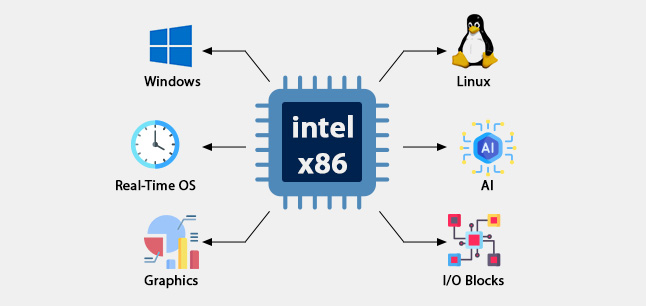
Software ecosystem is equally critical. Processor selection should align with your operating system, development tools, existing codebase, and drivers. This is where x86 architecture stands out. It offers broad compatibility with Windows, Linux, and real-time operating systems, along with extensive developer support. For those looking to reduce development time and risk, leveraging an established ecosystem can be a decisive advantage.
Balance Performance and Power
Power efficiency is a key consideration in embedded system design, especially for fanless or space-limited applications where cooling options are restricted. In these environments, heat management can quickly become a limiting factor, so selecting a processor that delivers strong performance without excessive power draw is essential.
Intel’s latest x86 processors are designed to provide more performance while using power efficiently. This means systems can handle demanding workloads while staying within safe thermal limits, even in compact or sealed enclosures. Intel CPUs support self-throttling when temperatures rise, allowing them to continue executing code.
For designers, this helps reduce the need for larger cooling solutions or more complex mechanical designs. It also provides more flexibility when building smaller systems that still need to perform reliably in real-world conditions.
Overall, improved efficiency allows embedded systems to do more in less space, helping engineers balance performance, size, and long-term reliability.
Evaluate Total System Impact
When evaluating options, consider the total system impact:
- Does the processor meet performance and real-time requirements?
- Is the software stack fully supported without significant rework?
- Are power and thermal constraints satisfied?
- Will the platform be available for the full lifecycle of the product?
A well-matched processor reduces design risk and simplifies validation.
Why Intel x86 Is a Strong Choice
Intel x86 processors remain a leading option for embedded systems due to their balance of performance, ecosystem maturity, and long-term stability:
- Performance scalability: Intel offers a wide range of processors, from low-power Intel Atom-class devices to high-performance Intel Core-class CPUs. This allows designers to scale within a common architecture as requirements evolve.
- Software compatibility: x86 enables native support for widely used operating systems and applications.
- Mature ecosystem: Decades of development have produced stable drivers, optimized libraries, and extensive documentation. This reduces integration risk compared to less mature architectures.
- Integrated features: Modern Intel processors consolidate functionality that previously required separate components, including graphics, media encoding/decoding, AI instruction sets, virtualization support, and security capabilities such as TPM and Intel Boot Guard.
- Deterministic performance options: Intel platforms support real-time extensions and hypervisor technologies, enabling consolidation of workloads while maintaining predictable behavior where required.
- Long lifecycle support: Intel’s embedded product lines are designed for extended availability, helping avoid costly redesigns in long-life programs.
- Vendor stability: Intel’s roadmap consistency and manufacturing scale provide supply chain confidence, which is critical for industrial, medical, and defense applications.
Leverage Proven Solutions
VersaLogic’s embedded computing solutions are built around these advantages. Their boards integrate Intel x86 processors with a focus on reliability, long lifecycle, and full-featured I/O. Engineers can select from compact form factors such as PC104 and single board computers, with support for USB, SATA, PCIe, and other critical interfaces required in modern systems.
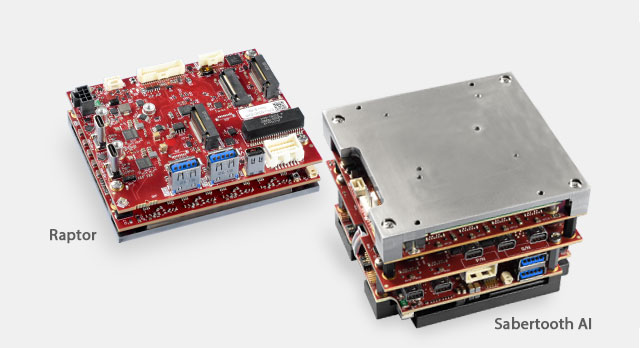
The Raptor features 13th Generation i5 Core Intel processor in an ultra-compact package.
The Sabertooth AI is a GPU-enabled PC104 embedded AI computer.
By choosing an Intel x86-based platform, designers gain a balance of performance, compatibility, and longevity. VersaLogic’s embedded boards are designed to simplify this decision, offering proven, production-ready solutions that reduce risk and accelerate time to market.
For engineers developing next-generation embedded systems, selecting the right processor is not just about specifications. It is about building a stable, scalable foundation for long-term success.
To learn more about selecting the right processor for your embedded system, explore VersaLogic’s rugged embedded computers or contact our team to discuss your application requirements.